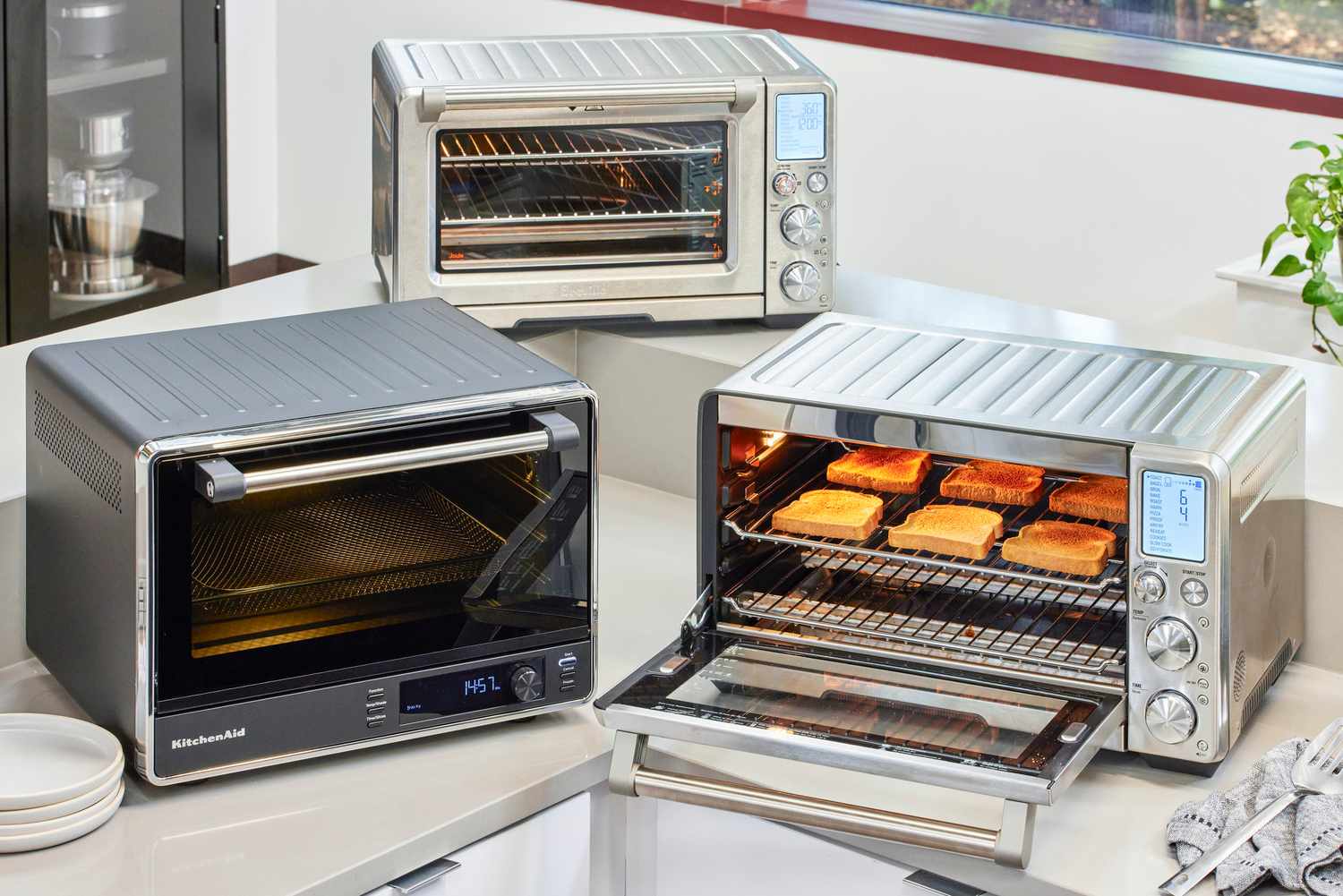
There’s a point at which you’re when you’re in front of an oven with a PS1,200 model that is refusing to acknowledge that you exist, and you begin to doubt the validity of everything. If the appliance can “pair” with WiFi but it doesn’t connect to you, who’s really the most intelligent one?
Our world is that is designed to be convenient. Instant deliveries. Lighting bulbs you can manage from the seaside in Tenerife. Refrigerators that can take care of your milk. Brilliant, isn’t it? I’m the first to declare that I am a fan of smart technology. My home is a concert hall of gadgets talking to one another while I am comfortably with a cup tea. (When the WiFi is working well, of course.) Convenience has transformed the way we work, live, and even relax.
Here’s the thing Accessibility without convenience isn’t a good thing at all. It’s an exclusion disguised by flashing lights and elegant glass panels.
Smart Devices, Stupid Problems
Although the advancement in the field of smart ovens has been remarkable however, it hasn’t always kept up with accessibility. For visually impaired and blind users, technology can allow them to be more independent. In the present, technology is ripping the doors shut.
Take modern kitchen appliances. The older models that had physical buttons and dials can easily be made to work by using tactile markers such as bump-ons. Now? A vast expanse of clear, unadorned glass. Touchscreens that annoy you with their inconsistencies. If you’re unable to see the screen, or if your finger does not activate the capacitive sensor enough – you’re stuck. If you have to rely on an app for controlling the stove, however, your internet isn’t working, you’re not cooking. You’re calling for a takeaway…again.
It’s not a theory. It’s real. It’s common. It’s also unnecessary.
Baking Accessibility In From the Start
How can we correct the issue? It begins with baking accessibility to the process of development, beginning from the very beginning, and not just putting it on like icing in the middle.
Here are some principles that must be unavoidable:
- Co-designing with disabled people: Don’t wait for later. It’s not in testing. The first time. Disability Rights UK stresses the importance of engaging people who have lived experiences early in order in the creation of truly inclusive products.
- Design to fail as well as succeed: What happens when WiFi goes down? If the application crashes? A functioning system is equipped with fail-safes to make sure that all functionality is maintained.
- Make interfaces as simple as possible: It is the RNIB (Royal National Institute for Blind People) insists the fact that “simple, intuitive design benefits everyone, not just those with a visual impairment.”
- Testing with actual users and not only engineers: Testing accessibility isn’t a box to check. It’s a dialogue with actual users, revealing the obstacles that no internal team could recognise without the experience of real users guiding the procedure.
- Be aware of global accessibility standards: Standards such as WCAG (Web Content Accessibility Guidelines) aren’t limited to websites. The guidelines can and should apply to all digital interfaces and even apps that manage physical devices.
Why This Matters (And Why So Many Get It Wrong)
If you’re working in tech or product design, or providing services to customers, you need a fact accessibility isn’t something that’s a specialised issue. It’s a common value.
According to the World Health Organisation, over 1 billion people in the world suffer from any form of disability. This is about fifteen per cent of the total population. The number is rising as the population ages.
If companies consider accessibility as a last resort, they’re not only disqualifying disabled customers. They’re disadvantaging a large loyal customer base and failing to comply with the legal requirements of laws such as the Equality Act 2010 in the UK.
The main reason? Inclusion-based design can lead to more appealing products for all. Large fonts can help fatigued eyes from a lengthy and tiring day. Physical buttons are more convenient when you’re stuffed with hands. Voice controls can be beneficial when you’re smeared in flour and when you’re trying to adjust the timer for your oven.
There’s no discussion of “special features” for a minority. We’re talking about improved design. All for everyone.
So next time you’re marvelling at your talking fridge, ask yourself.
Does it have the right mindset for you to make it inclusive?
For the simple reason that no one should need to pay $1200 for an item that periodically sends a ping to remind you that it’s more intelligent than you.